Commercial kitchen vector management balances biochemical insect controls with the physical realities of Philadelphia's aging commercial infrastructure. In high-density dining corridors like Fishtown, Northern…
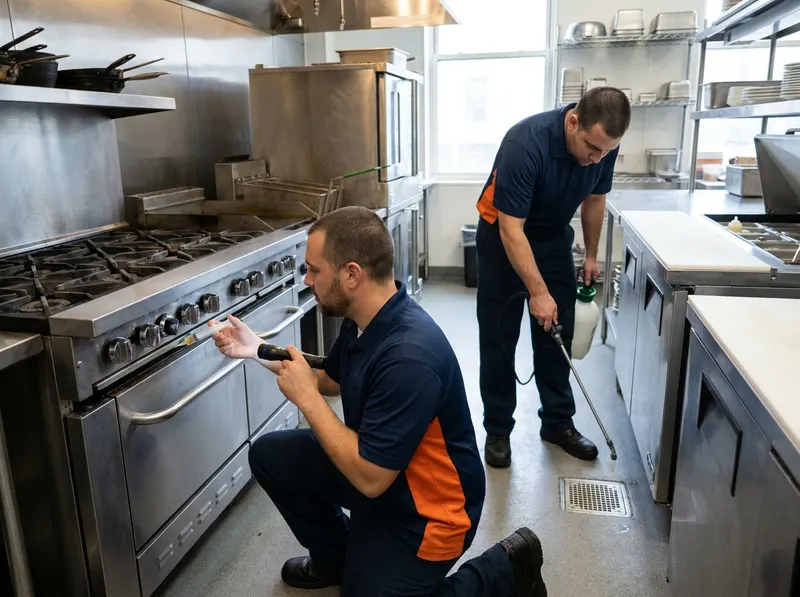
Commercial kitchen vector management balances biochemical insect controls with the physical realities of Philadelphia's aging commercial infrastructure. In high-density dining corridors like Fishtown, Northern Liberties, and Queen Village, historic brick row buildings frequently share unsealed party walls, sub-floor utility voids, and interconnected baseline plumbing. Standard topical chemical sprays disperse vectors into wall cavities rather than eliminating them, contaminating food prep surfaces and failing health inspections under Philadelphia Department of Public Health Title 6 regulations. Effective vector suppression replaces broadcast spraying with localized insect growth regulators (IGRs), targeted non-volatile gel baits in motor housing gaps, and physical mortar repointing.
Facility design dictates vector pressure. High-volume prep kitchens in Center City and Rittenhouse Square confront high structural moisture and grease accumulations under cook lines that support German cockroach colonies, whereas older basements across South Philadelphia and Port Richmond face localized Norway rat pressure through stone rubble foundations and floor drains. For kitchens operating near damp park corridors, such as Wissahickon Valley Park margins in Manayunk and Chestnut Hill, secondary perimeter exclusions focus on structural micro-gaps around walk-in refrigeration lines and grease trap vent pipes.
Vector protocols establish containment through three consecutive phases: 1. Deep mechanical inspection of damp zones, condenser pans, and wall penetrations using borescopes and UV inspection lamps. 2. Structural exclusion using stainless steel mesh, copper wool, and silicone elastomeric sealants on all openings exceeding 6 millimeters. 3. Placement of tamper-resistant vector stations and insect growth regulators that arrest the reproductive cycles of nymph populations without releasing airborne particulate over stainless steel prep tables. Facility operators balance immediate chemical knockdown against food-contact safety constraints, making systematic physical exclusion the durable defense for high-traffic food operations.
Every job gets a firm, written price after a free on-site visit.
Tell us about your commercial kitchen vector management job in Philadelphia and we'll send a clear, written quote, usually the same day.
 Kelvoro Pest Solutions